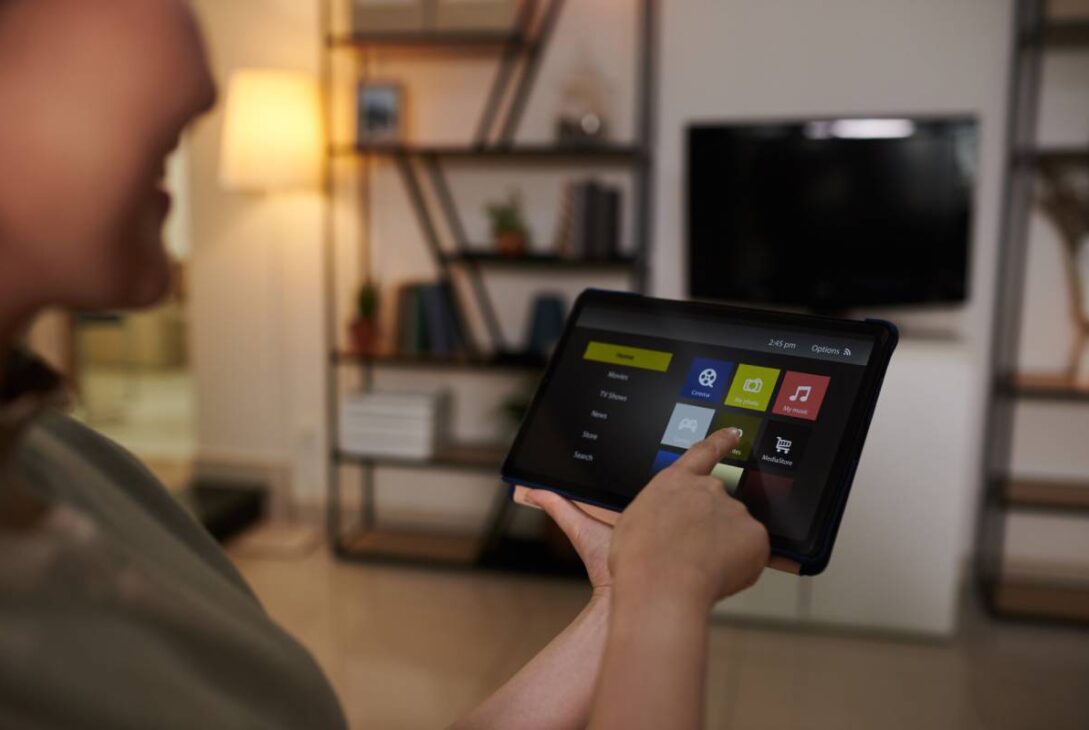
Have you ever left for work and spent the entire commute wondering if you left the coffee pot on or the front door unlocked? That nagging anxiety isn’t just a distraction—it’s a byproduct of a home that isn’t working for you.
Living in an “un-smart” home means wasting hours on repetitive tasks and losing sleep over security “what-ifs.” It’s inefficient, outdated, and frankly, unnecessary in the modern age.The solution is Home Automation. By connecting your home to a central “brain,” you can eliminate manual chores and gain total control over your environment from anywhere in the world.
What Is Home Automation?
Home automation is the automatic and electronic control of household features, activities, and appliances. It allows you to manage utilities (like lighting and climate) and security (like locks and cameras) via a centralized device or smartphone. It works by connecting hardware to the internet, enabling devices to communicate and trigger actions automatically.
How Home Automation Works
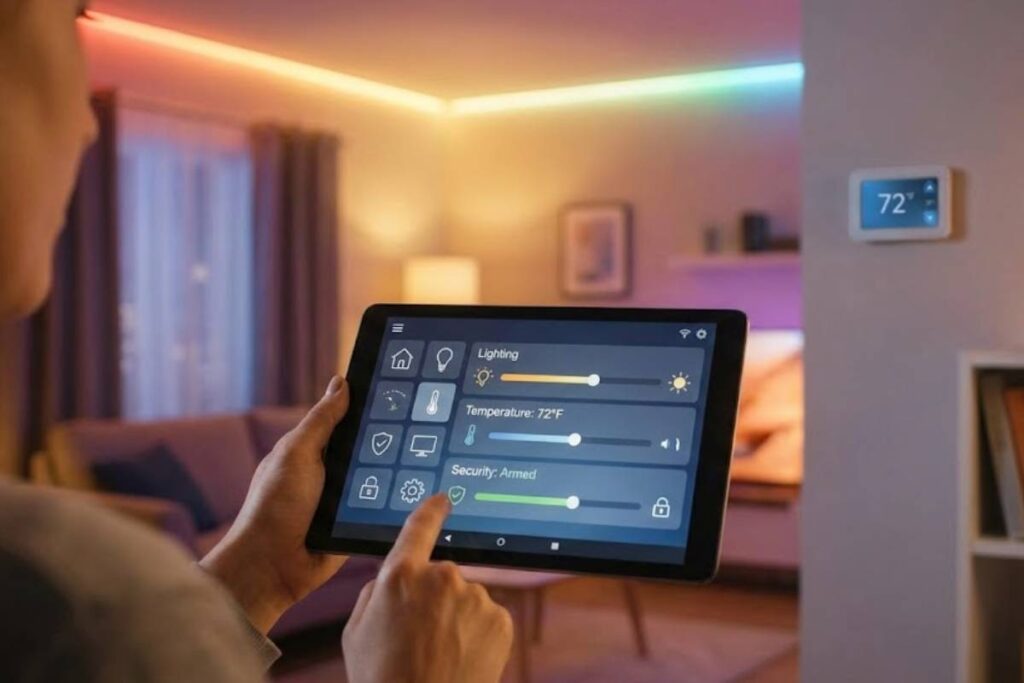
To understand the “magic” of a smart home, we have to look under the hood. Home automation operates on three functional levels:
1. Monitoring
Monitoring allows you to check in on your home remotely. Think of this as the “eyes and ears” of your house.
- Example: Viewing a live feed from your doorbell camera on your phone while you’re at the grocery store.
2. Control
This is the ability to send a command to a device. It moves beyond just watching and into active management.
- Example: Dimming the lights in your media room using a voice command or a mobile app.
3. Automation
This is the gold standard. Automation happens when devices trigger each other without human intervention.
- Example: Your “Good Morning” routine that automatically raises the blinds, starts the coffee maker, and adjusts the thermostat at 7:00 AM.
Core Components of a Smart Ecosystem
Every home automation system relies on two fundamental elements to function: The Hub and The Devices.
The Central Controller (The Hub)
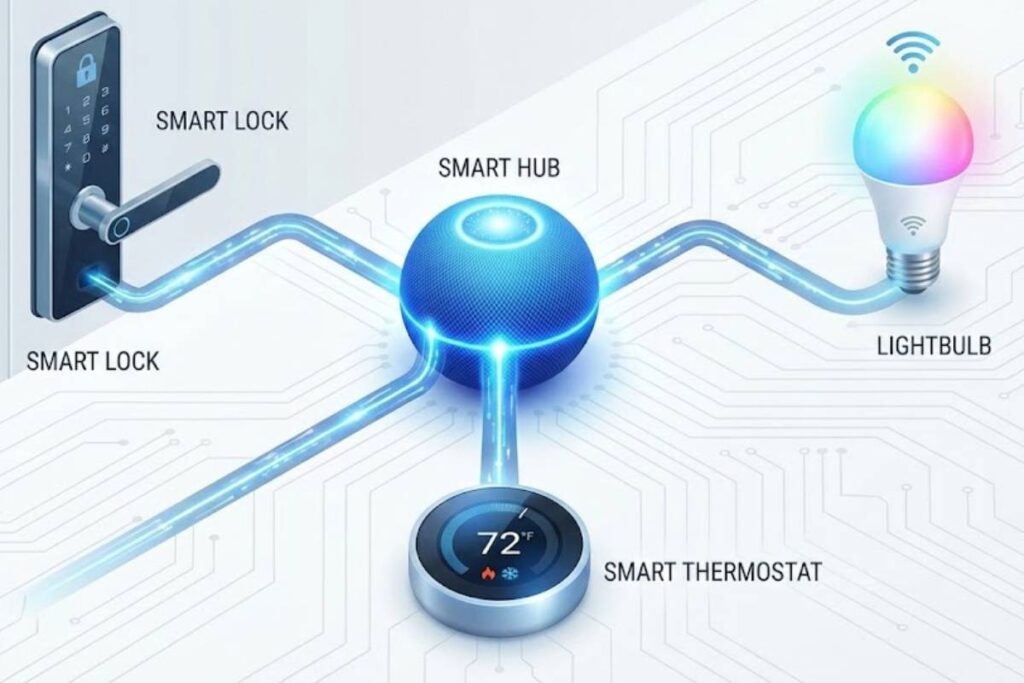
Think of the hub as the “brain.” It’s the command center that translates your requests into actions. While some people use a hardware hub (like Samsung SmartThings), many now use voice assistants like Amazon Alexa or Google Assistant.
If you are looking to integrate a high-performance system locally, experts like Reds Power Solutions in Central Coast can help design a centralized backbone that ensures your devices stay connected even when your Wi-Fi fluctuates.
The Managed Devices (The Hardware)
These are the physical objects that perform the tasks. Common examples include:
- Smart Thermostats: Learn your habits to optimize energy use.
- Smart Lighting: Changes hue or brightness based on the time of day.
- Smart Sensors: Detect water leaks, smoke, or motion.
Understanding the “Language”: Wi-Fi, Zigbee, and Z-Wave
For devices to talk to each other, they need a common language, known as a protocol.
- Wi-Fi: High bandwidth and easy to set up, but it can drain battery life and clutter your home network.
- Zigbee/Z-Wave: “Mesh networks” that don’t slow down your Wi-Fi. They use very little power, making them perfect for battery-operated sensors.
- Matter: The new industry standard designed to make all devices, regardless of brand, work seamlessly together.
The Benefits of a Connected Home
Why should you invest in home automation? It isn’t just about “cool” gadgets; it’s about ROI.
- Savings: Smart thermostats can reduce heating and cooling bills by up to 15%.
- Safety: Receive instant alerts if a door is opened or if a fire alarm is triggered while you’re away.
- Convenience: Never fumble for keys again with geo-fencing locks that open as you approach the door.
- Accessibility: For those with limited mobility, voice-controlled homes provide a new level of independence.
Ultimately, home automation isn’t just about security; it’s about clearing the mental clutter of daily chores so you can focus on mindfulness and personal well-being instead of worrying about unlocked doors.
Conclusion
Home automation is no longer a futuristic concept from The Jetsons. It is a practical, accessible solution for the modern homeowner looking to increase efficiency, safety, and comfort. Whether you start with one smart speaker or a fully integrated ecosystem, the goal is the same: a home that thinks for itself.
If you could automate one “annoying” chore in your house today, what would it be?